Shade sails are the ideal solution for swimming pools on the Costa Blanca: they block 90 to 98% of ultraviolet radiation, allow air to circulate, do not retain heat, and add an elegant design that transforms any pool area. Unlike rigid pergolas, sails create dynamic, organic shadows that blend into the landscape, and they cost 50 to 70% less than an equivalent fixed structure. For an average 8x4 m pool, a two-triangle configuration covering the lounging area costs €1,200 to €3,500 installed, depending on material and anchor system.
This guide covers everything you need to know to choose, install and maintain shade sails for your pool, with particular attention to Alicante’s climate.
Why do you need shade in the pool area?
The question may seem obvious, but the numbers are striking and worth keeping in mind:
Protection from UV radiation
Alicante records a UV index of 9-10 (“very high”) from June through September, and 6-8 in May and October. At this latitude (38°N) UVB radiation peaks between 11:00 and 16:00 - exactly when the pool gets the most use.
- Without protection, 15 minutes of midday exposure is enough to burn fair skin (Fitzpatrick types I-II)
- Reflection off the water increases the radiation received by 10-30%
- Children are especially vulnerable - their skin is around 40% thinner than an adult’s
- Cumulative unprotected exposure is the main risk factor for melanoma
Water temperature control
A pool with no shade in Alicante can hit 32-34°C in August - a temperature that feels barely refreshing and encourages algae growth. A shade sail covering 40-50% of the pool surface lowers the water temperature by 3-5°C, holding it in a more pleasant 27-29°C range.
Comfort in the lounging area
Sun loungers, hammocks and tables in direct summer sun reach surface temperatures of 55-65°C at midday. With shade, that drops to 35-40°C, making the area genuinely usable all day.
Which materials are best for poolside sails?
Not all materials are equal, and proximity to water, chlorine and humidity adds extra requirements. The two main materials are:
HDPE (High-Density Polyethylene)
HDPE is a breathable mesh fabric that has become the standard for outdoor shade sails. Its characteristics:
- UV protection: 90-95% blocking (UPF 50+ rating)
- Breathability: Lets air pass through, preventing greenhouse effect and lowering the temperature under the sail by 10-15°C versus direct sun
- Water permeability: Lets rain through, so it doesn’t accumulate weight or need drainage tilt
- Durability: 5-10 years of useful life with no significant fading
- Weight: 180-320 g/m² (light)
- Price: €80-150/m² installed
Poolside advantages: Being breathable, it doesn’t retain humidity and dries quickly. It doesn’t generate condensation that drips on swimmers. Sea breeze passes through the fabric, reducing wind load.
PVC Polyester (Technical Canvas)
PVC polyester is a waterproof, more robust material with different characteristics:
- UV protection: 95-98% blocking
- Breathability: None (waterproof)
- Water permeability: Fully waterproof - needs minimum 15% slope for drainage
- Durability: 10-15 years of useful life
- Weight: 400-700 g/m² (heavier)
- Price: €120-220/m² installed
Poolside advantages: Full rain protection, allowing covered seating areas. Higher UV protection. Better for covering dining areas next to the pool.
Direct comparison for the pool area
| Feature | HDPE | PVC Polyester |
|---|---|---|
| UV protection | 90-95% | 95-98% |
| Air flow | Yes (cooler) | No (more retained heat) |
| Pool-water resistance | Excellent | Excellent |
| Chlorine resistance | Good | Very good |
| Drying after rain | Immediate (permeable) | N/A (waterproof) |
| Wind load | Lower (breathable) | Higher (sail effect) |
| Rainwater pooling | No (passes through) | Yes (needs drainage) |
| Best for | Lounger zone and pool edge | Covered dining or seating |
| Useful life | 5-10 years | 10-15 years |
Our recommendation for Alicante: HDPE for the swimming and lounger areas (where ventilation matters most) and PVC polyester for a dining or barbecue area near the pool (where waterproofing matters).
What level of UV protection do you need?
UV protection is measured by the UPF rating (Ultraviolet Protection Factor):
| UPF rating | UV blocked | Protection level | Recommendation |
|---|---|---|---|
| UPF 15-24 | 93.3-95.9% | Good | Insufficient for Alicante |
| UPF 25-39 | 96.0-97.4% | Very good | Acceptable for occasional use |
| UPF 40-50 | 97.5-98.0% | Excellent | Minimum recommended for pools |
| UPF 50+ | >98% | Maximum protection | Ideal for children’s areas |
In Alicante, with summer UV indices of 9-10, we always recommend sails rated UPF 50 or higher. Make sure the certification follows Australian standard AS/NZS 4399 or European UNE-EN 13758 - the international references for textile sun protection.
Dark colours (navy, graphite grey, forest green) offer 5-10% more UV protection than light colours, but also absorb more heat. For pool areas in Alicante, mid-tone colours (sand, terracotta, mid-grey) offer the best balance between protection and coolness.
What design options are available?
Shade sails offer a design versatility few other shade structures can match:
Available shapes
- Triangle: The classic shape. Creates dynamic, angular shadows. Needs 3 anchor points. Common sizes 3x3x3 m to 6x6x6 m.
- Square / rectangle: Greater uniform coverage. Needs 4 anchor points. Sizes from 3x3 m to 6x8 m. Requires at least one higher anchor point to prevent water pooling.
- Pentagon and hexagon: For creative configurations. 5-6 anchor points. Less common but very decorative.
- Hyperbolic (saddle shape): The most aesthetically sophisticated option. Tension in opposing directions creates an elegant three-dimensional curve.
Popular configurations for pools
1. Two overlapping triangles: The most-requested setup. Two triangular sails at different heights with partial overlap create wide shade with visual interest. Coverage 25-35 m². Price: €1,800-3,200 installed.
2. Single rectangular sail: A simple, effective way to cover a specific area (loungers or dining). Coverage 12-24 m². Price: €1,200-2,500 installed.
3. Three triangles in a fan: A premium configuration that covers large areas with a striking visual effect. Coverage 35-50 m². Price: €3,000-5,500 installed.
4. Sail + pergola combination: A bioclimatic pergola for the dining area and shade sails for the swimming area. The most complete and versatile solution.
Most-requested colours for Alicante pool areas
The colours that work best aesthetically near pools in our area:
- Sand / cream: The most popular (35% of our installations). Goes with everything, bright and Mediterranean.
- Off-white: Elegant and clean, but needs more cleaning maintenance.
- Graphite grey: Modern and sophisticated. Very popular in contemporary homes.
- Mediterranean blue: Complements the pool water. Highly resistant to fading.
- Terracotta: Warm and natural - ideal for stone or wood surroundings.
How are shade sails installed near a pool?
Poolside installation has specific considerations that don’t apply elsewhere:
Anchor points
Each corner of the sail needs a firm anchor point. Options:
- Stainless-steel masts: The most common option for pool areas. Anchored with concrete footings (minimum 50x50x60 cm pad). Diameter 76-114 mm depending on sail surface area. Important: They must be AISI 316 stainless steel (marine grade) to withstand chlorine and salt air. Galvanised steel deteriorates within 3-5 years near a pool.
- Wall or existing-structure anchoring: Using anchor plates with chemical anchors. The wall must be solid concrete or solid brick - never hollow block without reinforcement.
- Tree anchoring: Possible for small sails (up to 12 m²), using protective straps so the trunk is not damaged. Only for trees with a trunk diameter over 30 cm.
Height and slope
- Minimum height of the lowest point: 2.20 m to allow comfortable passage underneath
- Recommended height of the highest point: 3.00-3.50 m for good ventilation
- Height difference between corners: Minimum 30-40 cm so water runs off (PVC sails)
- Distance from the pool edge: Masts should be at least 1.5 m from the pool edge for safety
Safety considerations near water
- All metal components must be AISI 316 stainless steel or certified for marine environments
- Tensioners and carabiners should be checked every 6 months
- Masts should not interfere with diving or jumping zones
- The sail must be removable in under 10 minutes in case of a storm
- For community pools, check that the installation complies with Royal Decree 742/2013 (the Spanish national regulation for swimming-pool installations)
How do you maintain shade sails in a pool area?
Maintenance is simple but important to maximise lifespan:
Regular cleaning (every 2-4 weeks in season)
- Remove leaves and debris with a soft brush or low-pressure water
- Wash with warm water and mild neutral soap (never bleach or acid products)
- Rinse thoroughly and air-dry
- For mildew or mould stains: a 10% white-vinegar solution, leave for 30 minutes, then rinse
Seasonal maintenance
Start of season (April-May):
- Inspect all anchor points and tensioners
- Check seam and reinforcement condition
- Deep-clean before installing
- Check correct tension (the sail should not have sagging or ripples)
End of season (October-November):
- Remove the sail, clean and dry it completely
- Store rolled (never folded) in a dry, ventilated place
- Inspect and grease tensioners and carabiners with silicone lubricant
- Check masts for corrosion
Winter storage
Costa Blanca winters are mild, but Levante storms between October and March can bring 70-90 km/h gusts. We recommend removing sails between November and March, unless they’re heavy PVC fitted with a quick-roll system.
If you prefer to keep them up year-round, at least take them down when gusts above 50 km/h are forecast. AEMET (the Spanish national weather service) issues warnings 24-48 hours in advance - more than enough time to take them down.
How much do pool shade sails cost?
Prices vary significantly with material, size and installation type:
| Configuration | Coverage | Material | Installed price |
|---|---|---|---|
| 1 triangle (4x4x4 m) | 7 m² | HDPE | €800-1,200 |
| 1 rectangle (4x6 m) | 24 m² | HDPE | €1,500-2,200 |
| 2 overlapping triangles (5x5x5 m) | 25-30 m² | HDPE | €2,200-3,500 |
| 3 triangles in a fan | 35-45 m² | HDPE | €3,500-5,500 |
| 1 rectangle (4x6 m) | 24 m² | PVC polyester | €2,200-3,200 |
| Premium with AISI 316 masts | 30-40 m² | HDPE premium | €4,000-6,500 |
These prices include the sail, anchors, tensioners, masts (where needed) and professional installation. AISI 316 stainless-steel masts make up 30-40% of the total cost, but they are essential in a pool area.
How does Alicante’s climate suit shade sails?
The Costa Blanca is, without exaggeration, the ideal place for pool shade sails:
- 300+ days of sun a year: The investment pays back almost year-round. From April to October (7 months), the sail is in daily use.
- Low rainfall: With only 280-320 mm of annual precipitation (concentrated across 30-40 days), breathable HDPE sails almost never accumulate water.
- Mostly gentle prevailing wind: Alicante’s habitual sea breeze (10-25 km/h) is easily handled by a properly tensioned sail. Only Levante storms (5-10 days a year) need precaution.
- High UV index: Fully justifies investment in quality sun protection.
- Outdoor living as a lifestyle: On the Costa Blanca, life outdoors is the cultural norm. A well-shaded pool area gets used from March through November.
Can shade sails be combined with other shading solutions?
Absolutely. The most successful combinations we install on the Costa Blanca are:
- Shade sail + bioclimatic pergola: The pergola covers the dining area (full protection with adjustable louvres) and the sails cover the loungers and pool edge. The perfect combination (read our bioclimatic pergola vs awning comparison to decide between them).
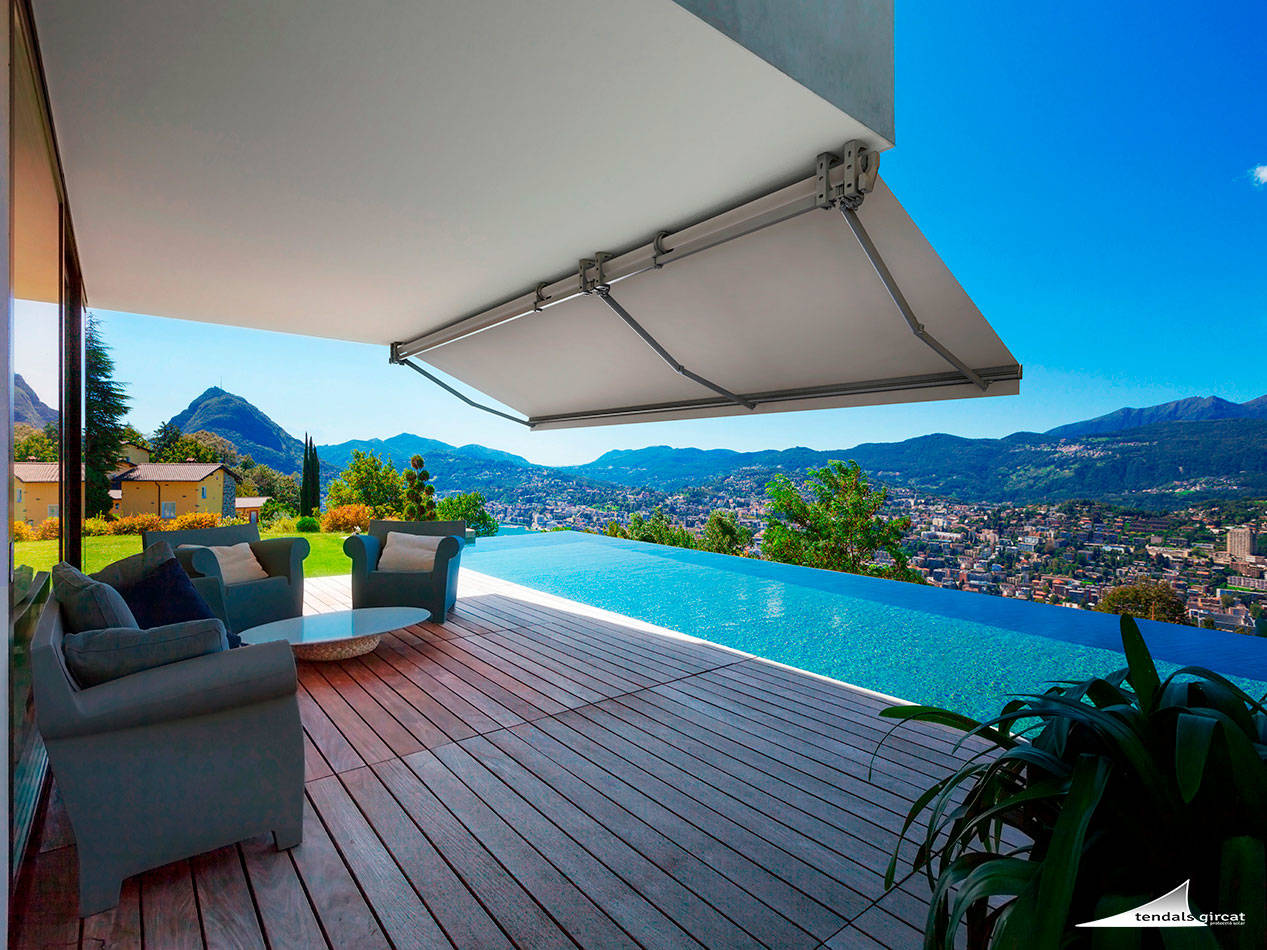
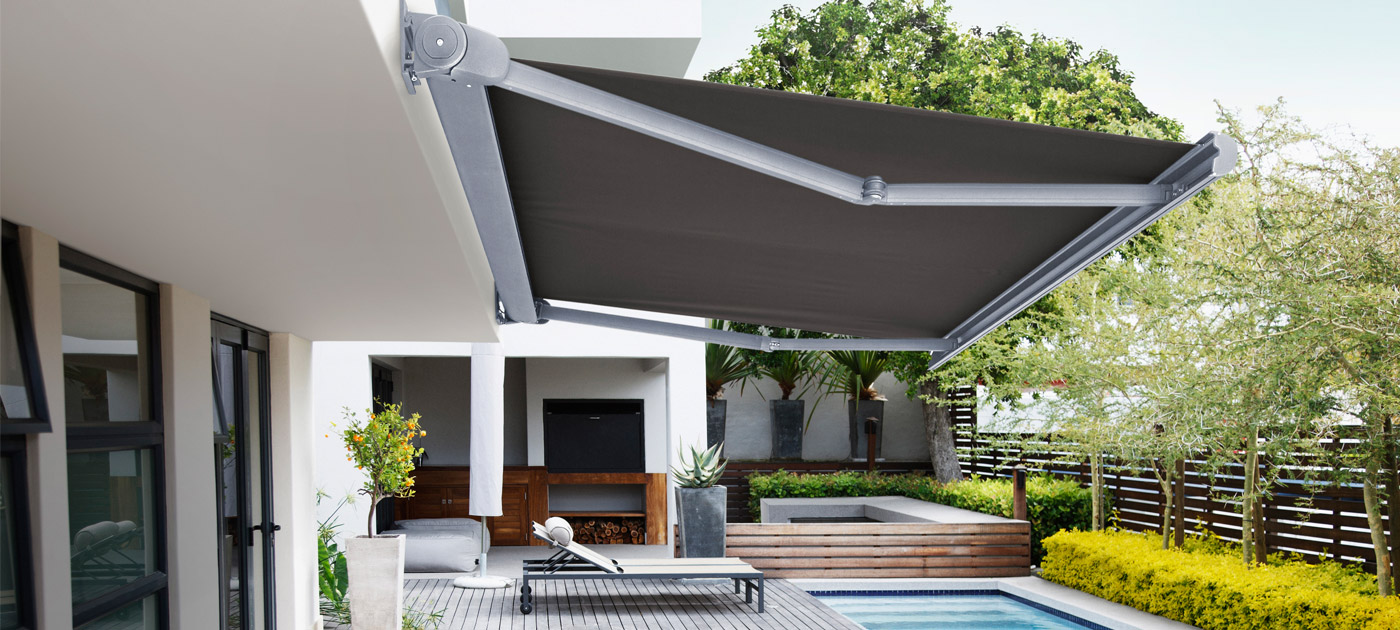
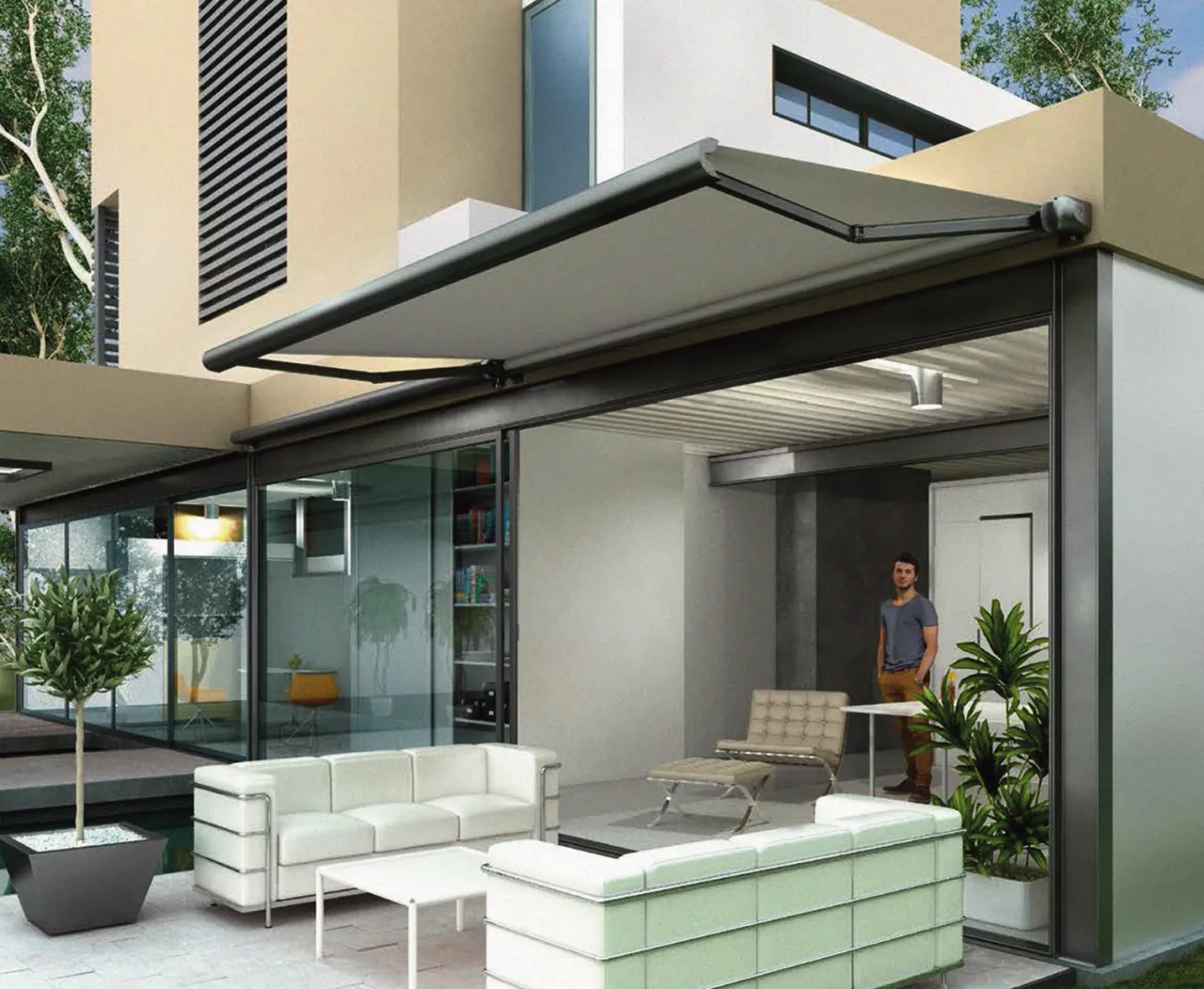
- Shade sail + retractable awning: If the pool is next to the house, a wall-mounted awning can complement the sail shade.
- Multiple sails at different heights: Layering shade with overlapping sails at different elevations increases UV protection and creates an extraordinary visual effect.
Frequently asked questions
Do shade sails withstand Alicante’s wind?
Yes - properly installed and tensioned sails handle winds of up to 60-70 km/h. For Levante storms with stronger gusts we recommend taking them down. A quick-release carabiner system lets you remove the sail in under 5 minutes.
Does pool chlorine damage the sail?
Occasional splashes are no problem. Both HDPE and PVC polyester resist chlorine at normal pool concentrations (0.5-2 ppm). Only prolonged exposure to very high concentrations could affect the colour.
Can I install a shade sail over the pool water?
Yes, this is perfectly possible and often recommended. The sail should sit at least 2.50 m above the water surface, and the anchor points must be outside the pool itself.
Do I need a council licence to install a shade sail?
In most cases on the Costa Blanca, shade sails with masts up to 3.50 m do not require a planning licence or “declaración responsable” - they’re considered removable elements. If the masts exceed 4 m, or if the foundations exceed 1 m³, prior notification to the town hall (“comunicación previa”) may be needed. Rules vary by municipality - see our planning permission guide for pergolas and awnings for the seven main councils.
How long does installation take?
A typical install of two triangular sails with two masts and two wall anchors takes 1-2 days. If new mast foundations are needed, add 3-5 days for the concrete to cure.
If you’re thinking about shading your pool on the Costa Blanca, browse our shade sails range or request a tailored quote. We come out to measure the space, assess anchoring options, and propose the ideal configuration for your pool.